
Design of Wastewater Treatment Systems
The design of wastewater treatment systems is a comprehensive engineering process that must be tailored to each facility's production processes, water characteristics, and environmental requirements. Rather than off-the-shelf solutions, projects developed through accurate analysis optimize both investment and operating costs while delivering high performance over many years.
Criteria Considered in the Design of Wastewater Treatment Systems
A successful treatment plant design goes beyond equipment selection. Each project is evaluated through detailed technical analyses and tailored to the specific facility.
Wastewater Characterization
The physical, chemical, and biological properties of the wastewater are analyzed to determine the required processes. This includes detailed examination of TSS, BOD, COD, nitrogen, phosphorus, heavy metals, and other pollutant parameters.
Hydraulic Flow Analysis
System capacity is properly sized by evaluating daily treatment volume (m³/day), instantaneous peak flows, and variations in production processes.
Discharge and Recovery Targets
The process design is developed according to scenarios in which the treated water will be discharged to the receiving environment or reused. This ensures both compliance with environmental regulations and maximization of water recovery.
Site and Layout Planning
Compact and sustainable solutions are developed by taking into account the physical conditions, topography, and future capacity expansions of the site.
Wastewater Treatment System Design Process
At Waterist, every project is managed with a systematic engineering methodology. The design process consists of three complementary core phases.
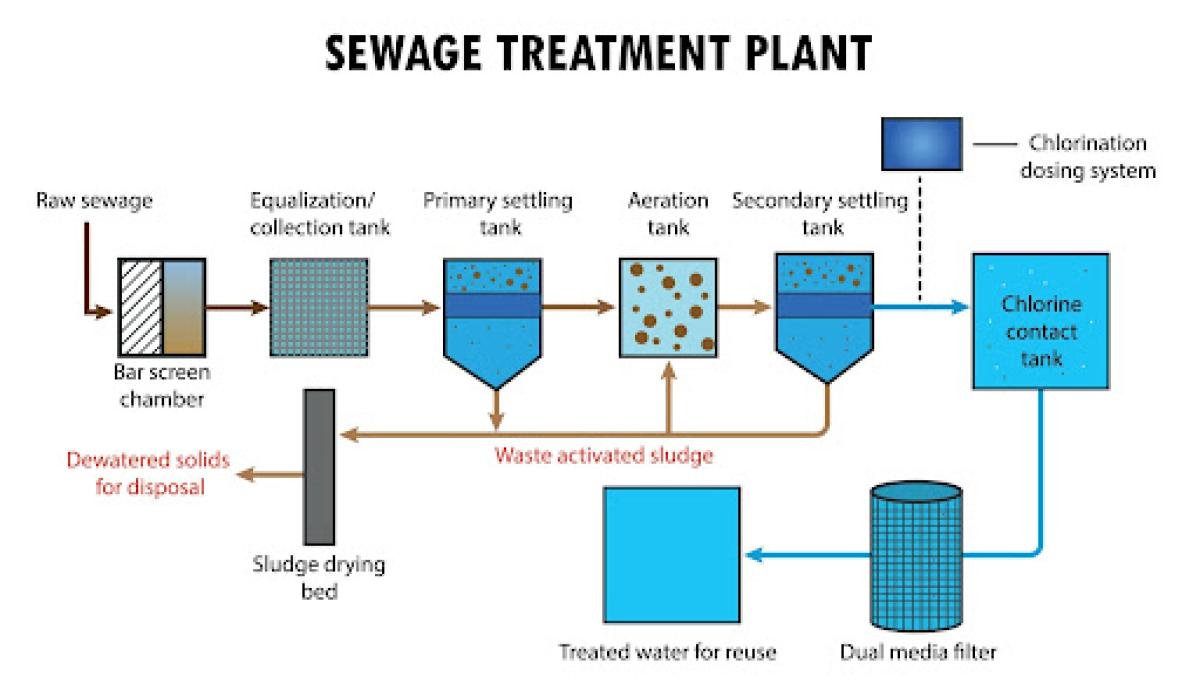
Pre-Treatment (Physical Treatment)
Pre-treatment is the system's first protective layer. In this stage, large solids, sand, and oil are removed from the water to ensure the safe operation of pumps and equipment.
- Coarse and fine screens
- Grit chambers
- Oil separators
- Primary sedimentation systems
Biological Treatment
Biological treatment is one of the most critical processes, in which dissolved organic pollutants are removed by microorganisms.
- Activated Sludge Systems
- Sequencing Batch Reactors (SBR)
- MBR (Membrane Bioreactor) Systems
Advanced Treatment and Disinfection
Advanced treatment technologies are applied in projects targeting water recovery or requiring high-quality standards.
- Ultrafiltration (UF)
- Reverse Osmosis (RO)
- UV Disinfection
- Ozonation Systems
The Importance of Technology in Modern Wastewater Treatment Systems
Today, a successful wastewater treatment system design...
- Delivers lower energy consumption.
- Reduces human error through automation.
- Minimizes sludge production.
- Uses less space thanks to compact designs.
- Provides remote monitoring and real-time intervention.
Smart Facilities with SCADA and PLC Integration
Facility performance is monitored in real time through SCADA and PLC-based automation systems. Chemical dosing, energy consumption, and process parameters are continuously kept under control.
- Energy efficiency is increased.
- Chemical consumption is optimized.
- Operating costs are reduced.
- Failure risks are minimized.
- Remote monitoring and reporting are simplified.
Request Engineering Consulting
Share your project details to get in touch with our environmental engineering team.